










Introduction
Taguan is a Filipino horror game from developer Murushii, and its biggest strength is how close to home it feels. Instead of haunted castles or abandoned asylums, it drops you into an ordinary neighborhood where a mysterious figure has started breaking into houses and people are disappearing without explanation.
You play as David Lagani, an everyday Filipino worker facing escalating dread as the break-ins creep closer to his own front door. That grounded premise gives the game a distinct identity. The setting, the streets and the domestic spaces will feel instantly recognizable to some players and refreshingly unfamiliar to others, and either way the result is a horror experience that stands apart from the usual indie crowd.
Gameplay Mechanics
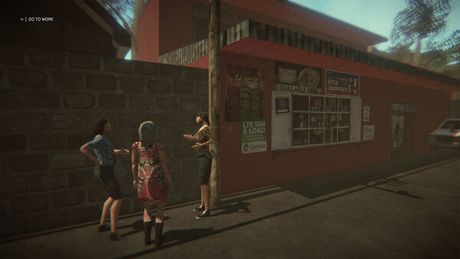
Most of your time is spent exploring a small set of locations: David's house, the surrounding barangay streets and grainy CCTV footage that hints at what is stalking the community. The game rewards careful observation, encouraging you to study your surroundings and piece together what has been happening before the threat arrives.
When danger does arrive, the focus shifts to survival rather than combat. You hide, hold your breath and try to stay as quiet as possible while something moves through the house. Light-based puzzles add another layer, asking you to manipulate illumination to progress or reveal clues. Noise matters throughout, and the game tracks how loud you have been, with multiple endings tied to how carefully you played.
The atmosphere is genuinely creepy, built on quiet moments, unsettling sounds and a slow sense that your safe space is no longer safe. Be aware that the game leans heavily on jumpscares, which will thrill some players and frustrate others. It is also a short experience, closer to a single evening than a lengthy campaign, which suits its tight, focused design.
How to Play
The single most important tip is to wear headphones. Taguan communicates a great deal through sound, from footsteps to subtle environmental cues, and good audio helps you react before you are spotted. Play in a darker room for extra immersion if you want the full effect.
Before you commit to a long session of Game, clear the onboarding properly. Finish the tutorial or first mission without skipping dialogue that teaches a mechanic, then open settings and lock a stable frame rate. Remap awkward binds early — especially interact, sprint, inventory, and voice-chat push-to-talk if the game loop depends on them.
Your first two hours should prove one core loop, not every system at once. Treat this as the north star: The single most important tip is to wear headphones. Taguan communicates a great deal through sound, from footsteps to subtle environmental cues, and good audio helps you react before you are spotted. Play in a darker room for extra immersion if you want the full effect. Park secondary crafts, cosmetics, and side modes until that loop feels automatic. Most early rage-quits happen because players open five menus before they understand one.
When you stall, change a single variable and retry: loadout, route, difficulty, teammate role, or economy timing. Watch one short clip only for positioning or UI cues, then close it and practice. Screenshot useful maps/menus into a folder so you are not alt-tabbing every death.
End each session with a three-line note — what killed you, what resource you lacked, and the first experiment for next time. That habit turns Game from “too much info” into a climb you can feel week to week, whether you play solo or with friends.
Pros & Cons
- ✅ Creepy atmosphere
- ✅ Unique setting
- ✅ Cheap indie
- ❌ Short
- ❌ Jumpscare heavy
Conclusion
Taguan is an affordable, atmospheric indie horror game with a setting you will not find anywhere else. Its short length and reliance on jumpscares hold it back slightly, but as a focused horror night it delivers. It is ideal for players who enjoy stealth-driven horror, small-scale indie experiments and stories rooted in real places rather than fantasy. Streamers and groups of friends passing the controller around will also get plenty out of its tense hiding sequences, and the multiple endings give curious players a reason to return for a second, quieter run.
Pick it up on itch.io for a roughly two-hour scare, and wishlist the Steam release if you prefer to keep your library there.