






Introduction
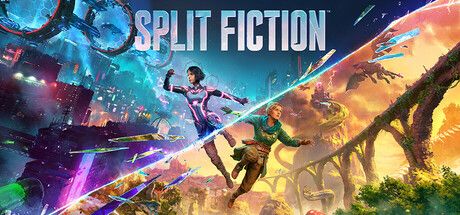
Split Fiction is Hazelight's follow-up to It Takes Two, and it is built for exactly two players who want a campaign full of set pieces, jokes and "wait, how did they design that?" moments. Mio and Zoe — one sci-fi writer, one fantasy writer — get trapped inside a machine that steals their stories, and the only way out is to finish each other's worlds together.
On Steam it sits at Overwhelmingly Positive (~96% of 24k+ English reviews), with launch peaks north of 250k concurrent. It is not a lobby shooter you can dip into alone. It is a couch or online co-op adventure that expects both pads in the room (or Remote Play Together) for the whole ride.
Gameplay Mechanics
Every chapter flips between sci-fi and fantasy toys: cyber-ninja movement one minute, dragon-taming slapstick the next. Challenges are dual-role by design — one player holds a portal while the other rides a laser rail, or both combine abilities into a shared combo that neither can trigger alone.
The pacing is relentless in a good way. Hazelight loves mid-level twists that change the controls, then cools down with quieter character beats so the duo can breathe. Difficulty spikes exist, but checkpoints are generous enough that rage-quits are rare if you communicate.
Online co-op, shared/split-screen and cross-play options make it easy to pair a Steam Deck with a desktop or a friend on another platform. It is pure two-player; there is no third seat.
How to Play
Pick roles early and stick to them for a chapter: one player calls puzzles, the other tracks timing hazards. Use voice chat even in split-screen if the TV is loud. When a mechanic is brand new, experiment for thirty seconds instead of speedrunning — most deaths come from assuming last chapter's rules still apply.
Before you commit to a long session of Game, clear the onboarding properly. Finish the tutorial or first mission without skipping dialogue that teaches a mechanic, then open settings and lock a stable frame rate. Remap awkward binds early — especially interact, sprint, inventory, and voice-chat push-to-talk if the game loop depends on them.
Your first two hours should prove one core loop, not every system at once. Treat this as the north star: Pick roles early and stick to them for a chapter: one player calls puzzles, the other tracks timing hazards. Use voice chat even in split-screen if the TV is loud. When a mechanic is brand new, experiment for thirty seconds instead of speedrunning — most deaths come from assuming last chapter's rules still apply. Park secondary crafts, cosmetics, and side modes until that loop feels automatic. Most early rage-quits happen because players open five menus before they understand one.
When you stall, change a single variable and retry: loadout, route, difficulty, teammate role, or economy timing. Watch one short clip only for positioning or UI cues, then close it and practice. Screenshot useful maps/menus into a folder so you are not alt-tabbing every death.
End each session with a three-line note — what killed you, what resource you lacked, and the first experiment for next time. That habit turns Game from “too much info” into a climb you can feel week to week, whether you play solo or with friends.
Pros & Cons
- ✅ Best-in-class 2p design
- ✅ Constant set-piece variety
- ✅ Online + split-screen
- ❌ No solo campaign
- ❌ Needs a committed partner
Conclusion
If you loved It Takes Two, Split Fiction is the 2025 co-op date-night upgrade: weirder worlds, sharper set pieces, still only for two. Buy it when you have a partner ready — solo is not the point.